 |
| |
SAUK RFID Vehicle Access Control System
SAUK Access, a vehicle access control system, enhances security across cottage villages, residential complexes, and enterprises by automating vehicle access restrictions. The new Vehicle ACS, designed to work with SAUK UHF RFID readers, efficiently manages pass issuance and deactivation, tracks vehicle movements, and enforces designated routes.
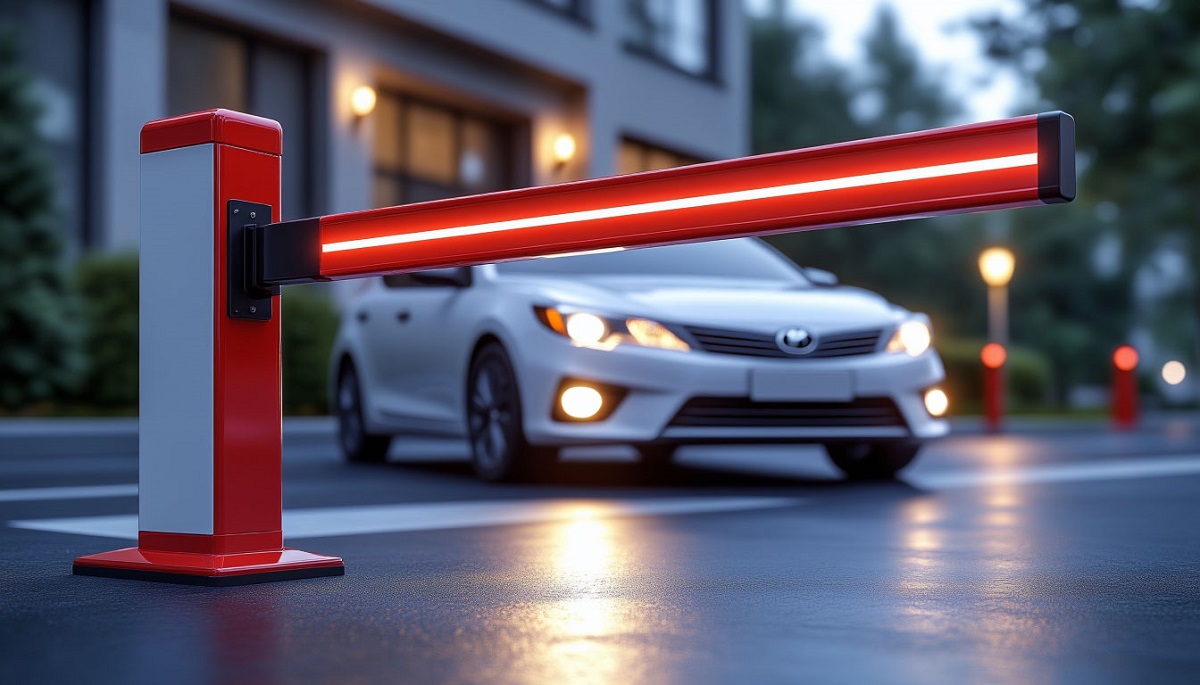
Key Advantages of SAUK Vehicle Access Control System
- Easy installation and setup. Simple integration into existing infrastructure without complex installation work.
- Convenient control with advanced filtering. Real-time filtering by facilities, vehicles, owners, and routes.
- Full automation. Barriers open automatically upon reading RFID tags — no more phone calls or unreliable radio remotes.
- Flexible deployment options. Available with a microcomputer or as a cloud-based solution.
- Mobility and cost efficiency. Manage the system from tablets and smartphones — no need to equip security checkpoints with PCs or laptops.
Applications
- Residential complexes and villas
- Business centers and malls
- Exhibition centers
- Parking facilities for municipal and administrative buildings
- Paid parking lots
SUPPORTS SAUK UHF RFID READERS
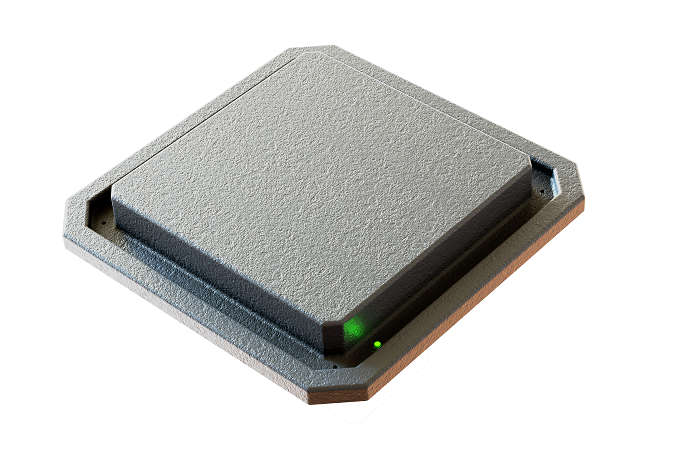
SAUK LR290-iot-pro with built-in antenna
SAUK M1 with built-in antenna

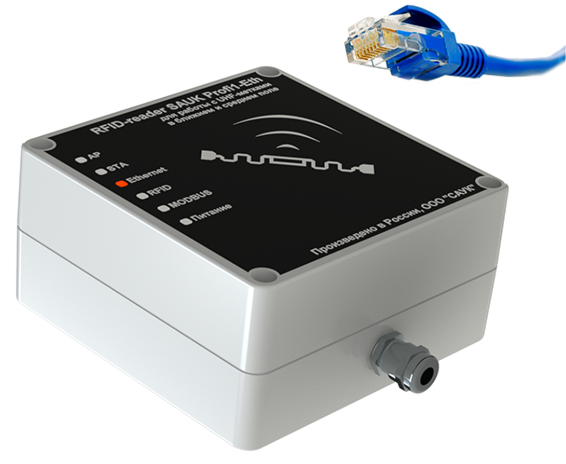
SAUK E2/E4, 2-4 ports
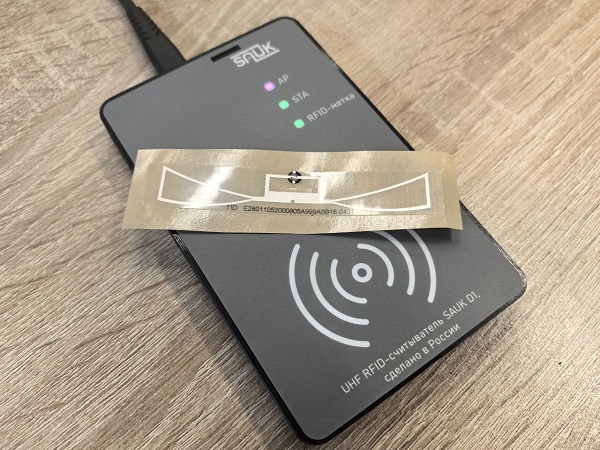
SAUK D1, desktop
Why SAUK Vehicle ACS Is a Smart Choice?
- Unlike standard integrations of UHF RFID readers with access control systems, our software greatly simplifies equipment selection and overall system setup.
- SAUK Access is universal, reliable, and ready to operate right after installation.
- All RFID tag operations can be automated using SAUK D1 desktop UHF RFID readers.
- SAUK Access Control System integrates easily with any enterprise information system.
SAUK Vehicle Access Control System Description
The SAUK Access vehicle identification system is a hardware-software complex designed to automate or assist vehicle access to controlled areas and to track vehicle movements. The system is based on UHF RFID contactless identification technology. Vehicles are identified on a friend-or-foe basis. Based on the identification results and permission checks, a control signal is sent to the barrier or gate actuator. In addition to controlling automatic barriers, the system monitors and logs vehicle movement history. Vehicle access can be restricted or blocked, and later restored.
The identifiers are passive contactless UHF RFID tags compliant with EPC Class1 Gen2 and ISO 18000-63 standards, which uniquely identify a specific vehicle or the person driving it. A passive RFID tag has no battery or accumulator, and its service life exceeds 20 years. Data encoded in the UHF RFID tag memory is processed to control barriers, gates, or other access points. The tag detection range is adjustable via software and hardware and can reach up to 15 meters. For most contactless access tasks, equipment settings for a range of about 5 meters are more than sufficient. In some cases, at the customer's request, even greater vehicle identification range can be achieved. The detection range also depends on the tag used, its shape, and dimensions.
A typical SAUK vehicle identification system configuration includes:
- SAUK UHF RFID readers and antennas
- Passive SAUK UHF RFID tags or cards
- SAUK Access server-based software (LAN or cloud)
How SAUK Vehicle Access Control System Works
- С применением сетевых интерфейсов Wi-Fi и Ethernet, с помощью промежуточного телекоммуникационного оборудования, считыватели из п.1 подключаются к серверу из п.4. UHF RFID readers and antennas are installed near the checkpoint.
- The antennas are directed toward approaching vehicles.
- Antennas are connected to readers using coaxial cable assemblies (except for monoblock readers, where the antenna is built into the reader housing).
- The software is deployed on a computer designated as the server.
- Using Wi-Fi and Ethernet network interfaces, with the help of intermediate telecommunications equipment, the readers from step 1 are connected to the server from step 4.
Simplified system operation scheme:
- A vehicle equipped with an RFID tag enters the antenna's coverage area.
- The UHF RFID tag responds with its EPC serial number or a combination of EPC + TID.
- The tag's serial number is transmitted to the SAUK Access software.
- The database contains a corresponding vehicle record.
- Access permissions are verified.
- Based on the permission check results, a command is generated to control the relay built into the RFID reader.
- A record of the vehicle identification event is added to the event log.
- Relay switching triggers the barrier to open.
SAUK Access ACS ensures security, access automation, and comfort for vehicle owners!
SAUK© 2020 – 2026. All texts and images presented on this website are the intellectual property of SAUK. They may be used only with the written consent of SAUK. SAUK® is a registered trademark. Orders are accepted only from legal entities.